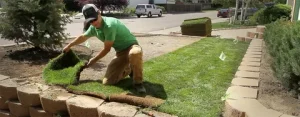
Hey! Isn’t it fascinating how the little things cause the biggest effects in a yard? The very spot between the grass and the garden bed — indeed, it is the very place where everything that seems impossible happens. A crisp edge turns “just a yard” into a space that looks cared for, designed, and finished.
But here’s the tricky part — choosing what that edge is made of. Brick, stone, or steel? Each one tells a different story. And if you’re thinking about lawn edging in Phoenix, AZ, that choice isn’t just about looks — it’s about survival. The heat, the dryness, the shifting soil — they all test what’s truly built to last.
Stick around till the end. You might just be surprised which one stands the test of time.
Why Does Lawn Edging Even Matter?
A yard without edging is like a painting without a frame — nice, but missing something. Edging defines your space. It tells the mulch, “Stay here.” It tells the grass, “Don’t even think about crossing that line.”
But it’s not just about control. It’s about creating a border that feels intentional, like your yard was designed — not just planted. In Phoenix, that matters even more because the desert doesn’t play nice. Between heat and dust, edging has to work harder just to stay in shape.
So, How Does Brick Edging Feel and Perform Over Time?
Brick edging has this warm, grounded energy. It seems like a familiar and comfortable place. A few people opt for it as it brings back old neighborhoods or gardens that have the aura of being used, not being perfect for display.
Pros:
- Bricks settle into the landscape instead of sitting on top of it.
- They’re easy to replace one piece at a time if something shifts.
- The color usually softens rather than fades, giving that “been here a while” vibe.
But there’s a thing to know:
Bricks move. Soil shifts. Roots push. Irrigation seeps.
One day, everything’s neat, and months later, one brick tilts slightly like it’s sighing. You’ll end up nudging them back into place now and then. Some people don’t mind that — it makes the yard feel alive. Others want edges that never shift.
A garden with personality may be a perfect match for you and the brick, while, on the contrary, if you are after super sharp lines, it might frustrate you.
Is Stone Edging Really the “Forever” Option?
Stone feels strong. It has presence. When you see stone edging, it sends the quiet message: this was planned, chosen, and built to last.
Why stone works well long-term:
- Heat doesn’t bother it much.
- It doesn’t fade, warp, or shift easily when the ground is prepared well.
- It blends with desert landscapes and lush lawns equally.
But here’s a small reality-check moment: stone can be heavy and stubborn. If the ground under it isn’t prepared right, stones slowly lean, like they’re tired of holding themselves up. If it is prepared correctly, though, stone barely asks anything of you again.
Stone edging suits someone who wants to make a decision once and be done. It’s a bigger commitment upfront, but often the least emotional labor later.
Does Steel Edging Make the Yard Look Clean and Sharp?
Steel edging feels modern — almost architectural. If stone is confident and brick is friendly, steel is the clean-shirt, sharp-jawline of edging choices.
It creates that satisfying crisp line where the grass ends and the bed begins. Like, lawn here. Garden here. No debate.
The neat parts:
- It doesn’t take up visual space — it lets plants or gravel shine.
- It’s surprisingly strong for how thin it is.
- Mowing around it is quick. No fuss, no fiddling.
But the emotional trade-off:
Steel can look a little “serious.” It doesn’t soften or age the same way brick or stone does.
Also, in the long, hot sun, the surface warms. It won’t hurt anything — just something you notice when you lean close.
Steel is for the person who wants clarity and tidiness — someone who likes it when things stay put.
Which One Fits Daily Living Best?
Here’s where real life steps in.
If you don’t mind occasionally fixing a shifted piece, the brick feels warm and human.
If you want something to last and never really want to think about it again, stone probably fits.
If you want clean lines with minimal maintenance and a modern look, steel might be your match.
A professional lawn care service in Phoenix will often ask:
- How often do you water?
- Do you mow yourself or hire?
- Do you want the yard to look polished or relaxed?
- Do you enjoy “tending” the yard, or do you want it to behave on its own?
Those answers matter more than the material itself.
How Does Local Climate Shape the Decision?
Heat, dry spells, and fast-growing seasonal grass all affect edging.
- Brick breathes and shifts more in changing soils.
- Stone shrugs off heat like it was built for it.
- Steel holds shape but may develop a patina depending on coating and water exposure.
So the best choice isn’t the most expensive or strongest — it’s the one that matches how you live with your yard.
The Last Word
Now you have observed the aging, shifting, sun resistance, and lifestyle compatibility of the different materials. Your garden has to feel nice every time you go out, not just on the day of installation.
When it comes to Lawn edging in Phoenix, AZ, consider your response to change, maintenance, and the amount of character you want your yard to have.
If you want help choosing and installing edging that truly suits your yard and your nature, reach out to CGL Landscaping— where every edge becomes the start of something beautiful.