Quick answer: Use drip irrigation for everything that is not grass: trees, shrubs, cactus, beds, and pots. Use sprinklers only for turf, where water has to cover a whole surface evenly. The two run at different pressures and rates, so they belong on separate valves. Most Chandler, Gilbert, and Mesa yards need both, and the biggest single fix is converting shrub beds still on spray heads over to drip.
Drip irrigation vs. sprinklers is not really a contest. They do different jobs, and most East Valley irrigation problems come from asking one to do the other’s work: spray heads soaking a rock bed, or two emitters trying to keep a Bermuda lawn green. Here is how each works, what the University of Arizona and the Valley’s water providers recommend, and which belongs where; our drip irrigation installation in Chandler page covers what a conversion involves.
How Drip Irrigation Works
A drip system delivers water slowly, in gallons per hour, through small emitters at each plant. According to the University of Arizona Cooperative Extension publication The Basics of Drip Irrigation for Landscaping (2016), emitters are usually rated at 0.5, 1, 2, or 4 gallons per hour, and drip runs at about 20 psi, so a pressure regulator steps the supply down from the 50 to 75 psi most homes have. A filter screens out particles so emitters do not clog, and emitters belong at the edge of the canopy, the dripline, where roots take up water. The same publication notes that drip saves water because little is lost to runoff or evaporation.
How Sprinklers Work, and Why They Fit Turf
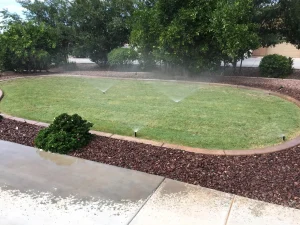
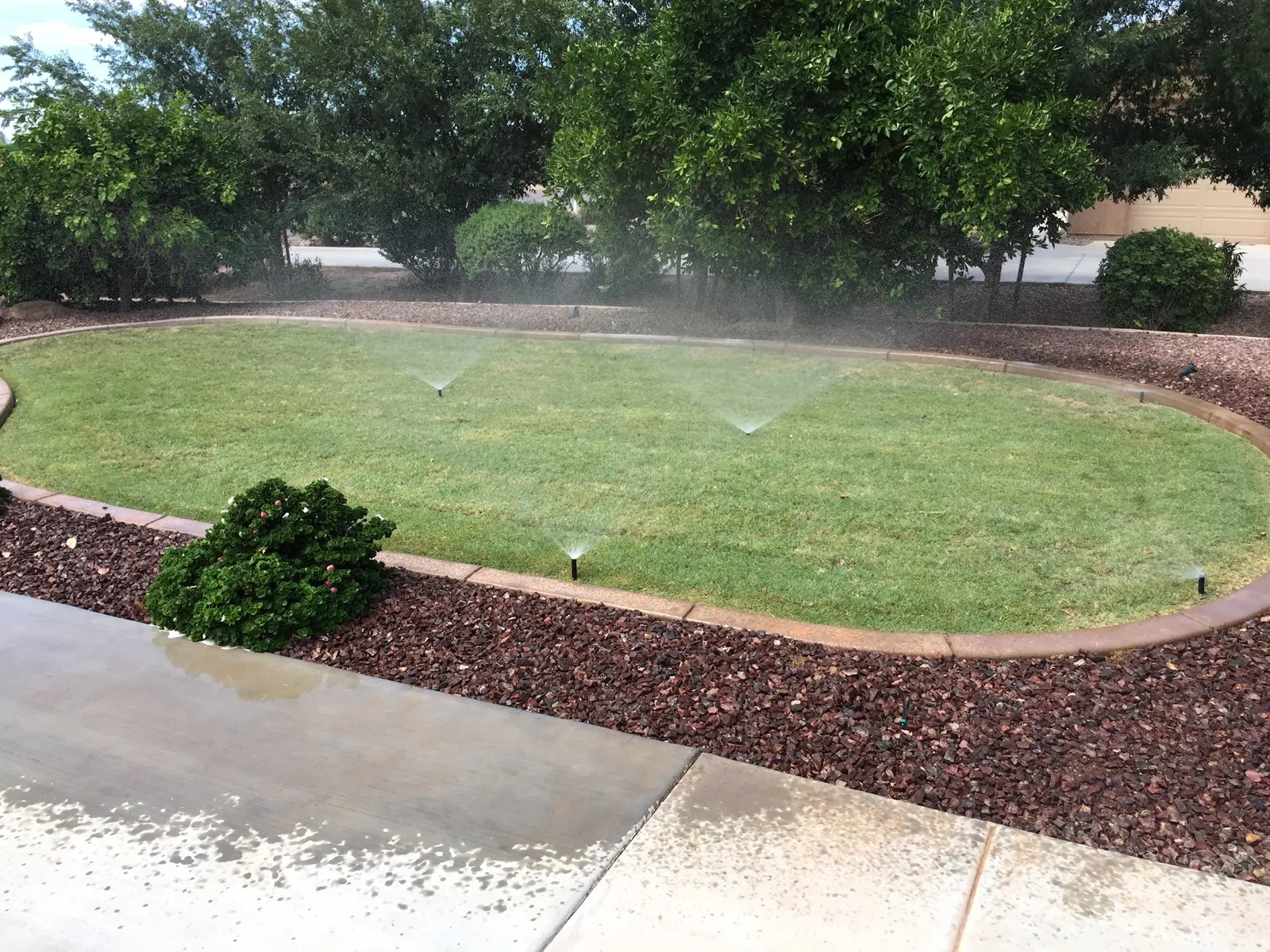
Sprinklers, whether pop-up spray heads or rotors, throw water through the air over a whole surface, which is what a lawn needs and a shrub bed does not. The Landscape Watering by the Numbers guide, produced by Water Use It Wisely with the Arizona Municipal Water Users Association cities including Chandler, Mesa, Gilbert, and Tempe, puts average pop-up sprinkler output at 0.4 inches of water in 15 minutes and impact sprinklers at 0.2 inches, and describes a can test for measuring your own. It also says to run sprinklers in the early morning, one to three hours before the sun is up, so less water evaporates. Its 1-2-3 Rule has grass watered to a depth of about 10 inches, and its seasonal table lists warm season grass such as Bermuda at every 3 to 6 days in summer and every 15 to 30 days in winter dormancy. A zone with a broken or tilted head cannot hit those numbers, which is why sprinkler repair is usually about coverage, not just leaks.
Drip vs. Sprinklers: Side by Side
| Factor | Drip irrigation | Sprinklers |
|---|---|---|
| Delivery | Slowly, at each plant, in gallons per hour | Through the air over a whole area, in inches per 15 minutes |
| Pressure | About 20 psi, regulator and filter at the valve | Household pressure |
| Best for | Trees, shrubs, cactus, groundcovers, beds, pots | Bermuda or winter rye lawns |
| Water loss | Little lost to runoff or evaporation | Wind, evaporation, overspray onto walls and rock |
| Schedule | Long run times, days or weeks apart | Short run times, every few days in summer |
| Common failures | Clogged emitters, cracked surface tubing, no regulator | Broken or tilted heads, uneven coverage, leaks |
Drip vs. Spray for Desert Plants: Why Depth Decides It
Desert-adapted plants want deep, infrequent water. The 1-2-3 Rule calls for watering groundcovers to 1 foot deep, shrubs to 2 feet, and trees to 3 feet, and the guide’s seasonal table lists desert-adapted shrubs and trees at every 7 to 21 days in summer and every 14 to 30 days in spring and fall. A spray head cannot push water 2 or 3 feet down without most of it running off; drip can, because it applies water slowly for a long time. The guide’s own comparison: 10 gallons takes about 2 minutes from a hose and about 10 hours from a single 1 gallon per hour emitter, which is why drip zones use several emitters per plant and run for hours. A soil probe pushed in an hour after watering shows whether you reached depth.
There is a water bill argument too. EPA WaterSense reports that microirrigation, which includes drip, uses 20 to 50 percent less water than conventional sprinkler systems and can save a typical home more than 25,000 gallons a year. In a desert landscape of palo verde, Texas sage, lantana, and agave, none of that water should go through a spray head.
Converting Sprinklers to Drip
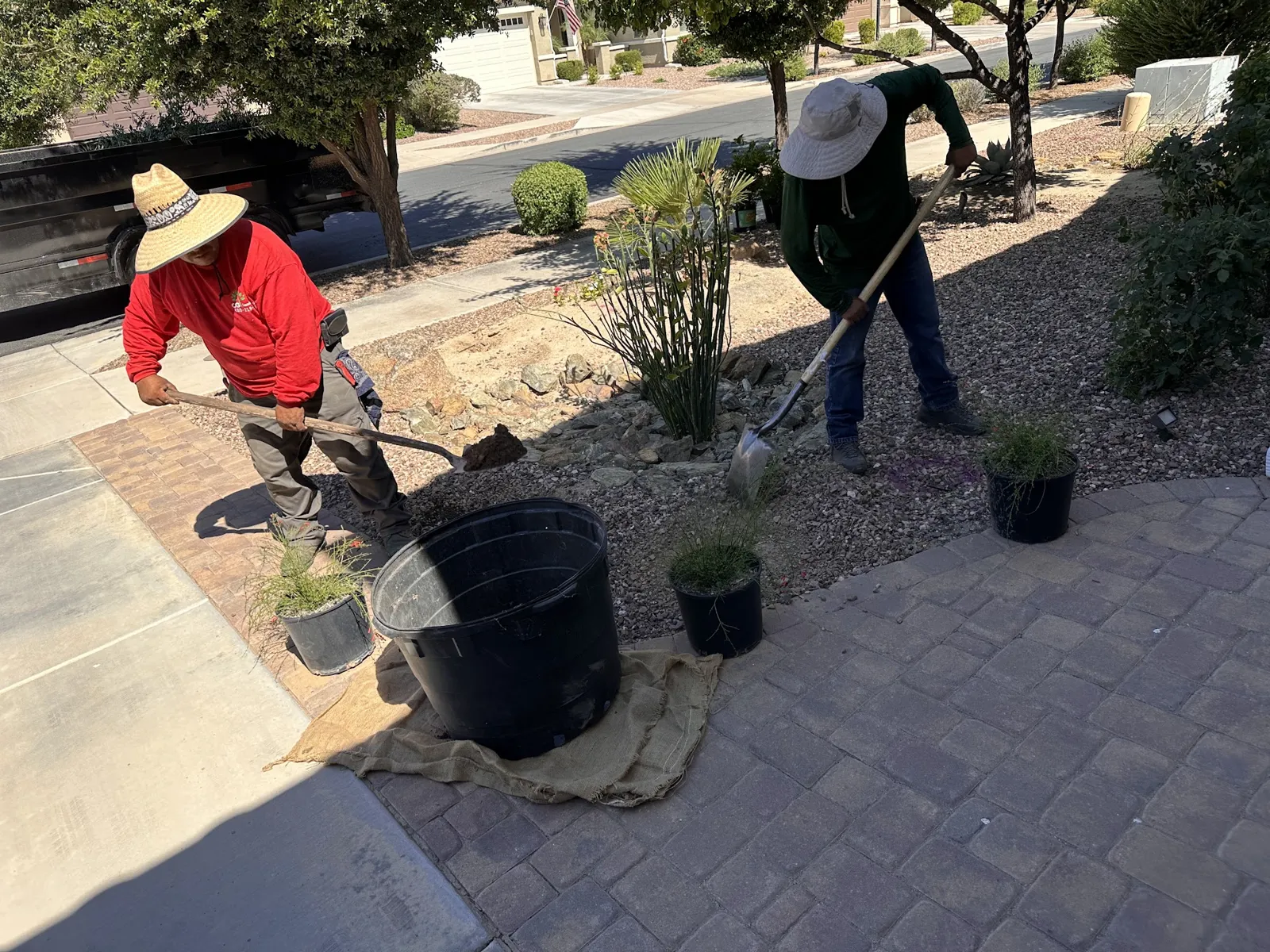
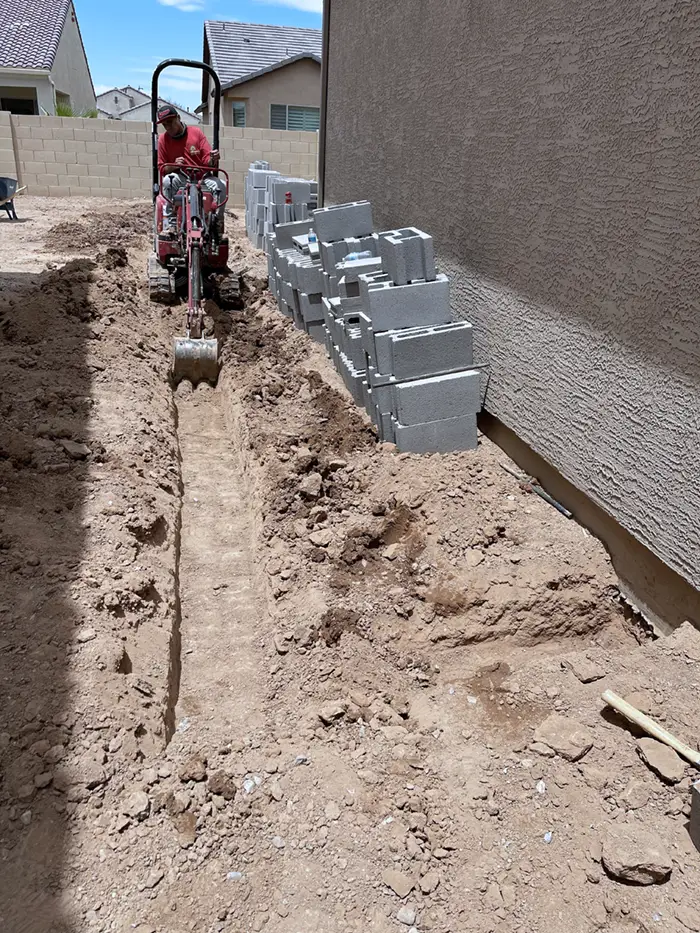
Converting a shrub bed from spray to drip is the most common irrigation upgrade we do in Chandler. The University of Arizona publication is clear that sprinklers and drip apply water at different rates and under different pressure, which requires separate valves, so the first question is whether the bed shares a valve with turf. If it does, the zone gets split. From there: cap the spray heads, add a filter and pressure regulator at the valve, run tubing under the rock to each plant, place emitters at the dripline, then flush the lines and check every emitter while the zone runs. Two mistakes recur: tubing left on top of the rock, which gets brittle in summer heat and cracks, and a missing regulator or filter, which is behind a lot of dead plants. Our post on protecting your irrigation system from Arizona heat, dry soil, and wind covers seasonal upkeep.
Which Watering System Fits Your Yard?
- Rock front yard with palms, shrubs, and a tree: all drip, no spray heads anywhere. This is the default drip irrigation system in Arizona front yards.
- Bermuda lawn with a shrub border: sprinklers on the turf, drip on the border, separate valves. If both share a valve today, fix that first.
- Mixed bed with trees, shrubs, and succulents on one valve: the watering guide uses this exact case as an example of an inefficient layout; fix it with separate zones or emitter sizes adjusted so run times line up.
- Artificial turf with planted borders: the turf needs no water, so the whole yard becomes a drip project.
What Customers Say
From the initial contaot through the completion of the drip system install, everything went very smooth.
Jose was upfront on the pricing, which turned out to be more than fair. The job was scheduled and completed in an extremely timely manner. As promised, the crew updated our old system and left the yard looking a bit better than when they arrived. I highly recommend CGL Landscaping! You will be happy with your choice..
Frequently Asked Questions
Is drip irrigation better than sprinklers in Arizona?
For anything that is not grass, yes. Drip puts water at the roots with little loss to evaporation or runoff, and EPA WaterSense reports microirrigation uses 20 to 50 percent less water than conventional sprinklers. For a living lawn, sprinklers are still the right tool because turf needs even coverage.
Can I put drip and sprinklers on the same valve?
No. The University of Arizona Cooperative Extension notes that sprinklers and drip apply water at different rates and run at different pressures, so they need separate valves. Sharing a valve means one side is always over- or under-watered.
How long should a drip system run?
Long enough to wet the root zone to the 1-2-3 Rule depth: about 1 foot for groundcovers, 2 feet for shrubs, and 3 feet for trees. With emitters rated in gallons per hour that usually means hours, not minutes. Check with a soil probe an hour after watering, then change frequency, not run time, as seasons change.
How often should I water desert plants on drip in summer?
The Landscape Watering by the Numbers guide lists desert-adapted trees and shrubs at every 7 to 21 days in summer, high water use shrubs at every 5 to 7 days, and cacti and succulents at every 14 to 30 days. Newly planted material needs water far more often for the first several weeks.
What does converting sprinklers to drip involve?
Confirming the bed is on its own valve, capping the spray heads, adding a filter and pressure regulator at the valve, running tubing under the rock to each plant, placing sized emitters at the dripline, then flushing and testing every emitter.
Get the Right System on Every Zone
CGL Landscaping installs and repairs drip irrigation and sprinklers in Chandler, Gilbert, Mesa, Tempe, and across the East Valley. We count the plants before we count the parts and run each zone with you before we leave. Every free on-site estimate comes with a written price. Call (480) 219-0038 or request a free estimate for drip installation, a spray-to-drip conversion, or sprinkler repair.