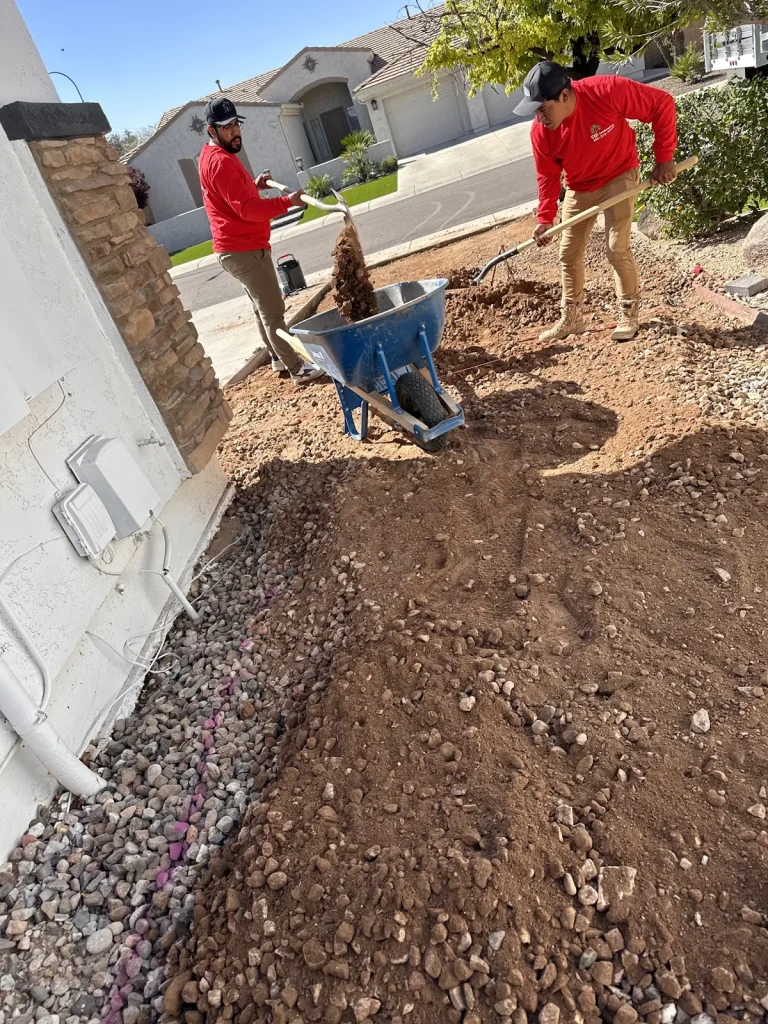
Desert plants want slow water at the roots, not a spray. We install drip irrigation in Chandler, AZ that does it. Call (480) 219-0038 and we will run lines and emitters sized for your shrubs, trees and beds, set the timer and check every zone. We are family owned, licensed, bonded and insured, and your free estimate comes with a written price.
Tell us where the yard is and we will come measure it.
No obligation. We do not sell your details.
Every new drip zone gets
Emitters per plant
Filter and regulator
Flush and test
Per plant emitters
Sized to shrub, cactus or tree.
Less runoff
Water soaks in instead of running off.
Hidden tubing
Lines under rock and out of sight.
East Valley work
Chandler, Gilbert, Mesa, San Tan Valley.
Why drip
Spray heads waste water on a desert yard.
A spray head on a rock bed wets the gravel, the wall and the walkway along with the plant. Drip puts a measured amount of water into the ground at each plant, slowly enough that it soaks in. In the Chandler heat that means less lost to evaporation and more reaching the roots.
Drip irrigation suits desert landscaping in Chandler for that reason. Sonoran Desert plants like palo verde, agave, lantana and bougainvillea want deep, occasional water, and drip delivers it without keeping the surface wet.
Ready when you areWant every plant watered without wasting a drop? CGL Landscaping installs and repairs drip irrigation in Chandler, Gilbert, Tempe and across the East Valley, with emitters sized for desert plants and trees. Book a free on-site estimate or call (480) 219-0038.
Anything that is not a lawn is a good fit for drip. Shrubs, cactus, trees, flower beds and potted plants all take water better at the root.
Here are six places on Chandler, Gilbert and Mesa properties where we install and extend drip systems. They run from front yards to commercial islands.
01
Front yard rock beds and palms
Drip runs under the rock to each palm and shrub, so the yard stays clean and nothing sprays the curb.
02
Parking islands and medians
Commercial planters where spray would soak cars and pavement. Drip keeps the water in the island.
03
Trees
Emitters spaced out toward the edge of the canopy and added as the tree grows.
A drip quote starts with the plants. We walk each bed, note what is planted and how big it is, check the valve and the pressure, and then give you a written price for the drip work.
We also look for an old filter or a missing pressure regulator at the valve. Those two parts are behind a lot of dead plants on East Valley drip systems.
Drip is simple once it is laid out right. Common drip problems come from a missing filter, the wrong emitters or tubing left on the surface to cook.
In summer heat, tubing left on top of the rock gets brittle and cracks. We bury or cover the lines and bring each emitter up at the plant.
01
Plan the layout
Plants, emitters and tubing mapped.
02
Set the head
Filter and regulator added at the valve.
03
Run the tubing
Lines trenched or buried under rock.
04
Place emitters
Sized and set at each plant.
05
Flush and test
Lines flushed, every emitter checked.
Plants and beds
Drip pairs with a desert landscape.
A lot of drip work goes in alongside new plants, rock and trees. Doing the irrigation on the same job means the tubing goes in before the rock, not dug in after.
Desert trees like palo verde and mesquite, shrubs like Texas sage and ground covers like lantana all belong on drip. Planning the layout with the planting plan puts an emitter where each root ball ends up.
Every yard has a different plant count and layout, so drip is priced after we see it. These are the four things that matter.
A small front yard bed in Chandler and a full desert backyard in Queen Creek are both drip jobs. The tubing, the emitter count and the labor are very different.
Number of plants
Each plant needs its own emitters and a line to reach it.
New or existing
Adding to a working zone takes less than starting from the valve.
What covers the ground
Working under existing rock takes longer than open soil.
Trees in the mix
Trees need more emitters and may need their own line.
The written quote covers all of it before we start.
What neighbors say
What East Valley homeowners share about CGL.
Google reviews from East Valley homeowners in Chandler, Gilbert and Queen Creek. These are customers who hired CGL Landscaping for their yards.
We are a local, family run company, and every review here comes straight from Google. Take a look before you book your estimate.
Questions
Drip irrigation questions.
Ask us anything not listed here during your free estimate. We can check a zone with you while it runs.
Run times, dying plants and tree watering are the common drip questions in Chandler, especially heading into summer. Here are straight answers.
Drip runs much longer than spray because it puts water out slowly. Run times depend on the emitters and the plants, so we set them per zone rather than guessing.
/02 Why are some plants on my drip dying?
Usually a clogged or missing emitter, a broken line or an emitter too small for the plant as it grew. Checking the zone while it runs shows which one it is.
/03 Do trees need a separate drip zone?
Often they do, since trees need more water less often than shrubs. We will look at your valves and tell you if a separate zone makes sense.
/04 Can drip tubing go under rock?
Yes, and it should. Covered tubing lasts longer out of the sun and keeps the yard looking clean.
/05 How often does drip need maintenance?
Flush the lines and clean the filter now and then, and check the emitters as plants grow. Adding emitters over time is normal.
/06 Do you install drip in San Tan Valley?
Yes. We install drip across San Tan Valley, Queen Creek, Chandler, Gilbert and the East Valley.
Where we work
Drip installs across Chandler and the East Valley.
Chandler based, with drip work from Gilbert to San Tan Valley. We also cover Mesa, Tempe, Queen Creek and Ahwatukee.
Desert landscapes across Maricopa County run on drip, from new builds with fresh rock to older yards with mature trees. We work on both.
CGL is a family company in Chandler. The people laying your drip line are on our crew, and they plan it knowing how an East Valley summer treats a plant.
We plant, rock and care for desert yards, not just run tubing. That is how we know where the emitters need to go.