In the Chandler area there are two pre-emergent windows. Apply in late September to early November, before winter weeds sprout. Then apply in late February or early March, before summer weeds sprout. A pre-emergent only stops seeds that have not sprouted yet, so it must go down first, get watered in per the label, and it will not kill weeds you can already see.
By January, many Chandler yards have a carpet of weeds in the lawn and the rock beds, and the usual question is why the pre-emergent did not work. Most of the time, it went down too late, or it never got watered in. This guide explains the two Arizona windows, what a pre-emergent can and cannot do, and what to do if you missed the fall one. It draws on University of Arizona Cooperative Extension turf guidance and NOAA temperature normals.
What a Pre-Emergent Does (and Does Not Do)
A pre-emergent herbicide is a barrier, not a weed killer. It works on seeds that are about to sprout, and it has to be in place before they do. That is why timing matters more than the product, and why it will not help with weeds that are already growing.
How a pre-emergent works, in four steps
General explanation based on University of Arizona Cooperative Extension guidance and common product labels. Always follow the label on the product you use. Not a statistic.
The Two Arizona Windows
Fall: for winter weeds
Winter weeds sprout as nights cool down. In the University of Arizona Extension publication AZ1885 on annual bluegrass, the authors note that in Arizona it germinates in the fall, grows through winter, flowers in spring and dies as summer heat arrives. In non-overseeded bermudagrass, it typically emerges in mid to late October. The publication points to a pre-emergent application in late September or early October for the flush of weeds that sprout in early fall, and says a repeat application in December can give season-long control into spring. UA notes that a few products with early post-emergent action allow a later application in early November, when weeds are just showing their first true leaf.
Late winter: for summer weeds
Summer weeds such as crabgrass, southwestern cupgrass and spurge sprout as the soil warms. According to a University of Arizona Turfgrass Extension note, Spring Weed Control: Pre-Emergence Herbicides, late February or early March is the season to have your spring pre-emergence program done, and pre-emergence is the best and easiest way to control summer annual grassy and broadleaf weeds.
Chandler Heights: normal average temperature by month (°F)
Dark green bars mark the months UA Extension names for pre-emergent timing: late September to early November for winter weeds, and late February to early March for summer weeds. Bars start at zero. Source: NOAA NCEI U.S. Climate Normals 1991-2020, Chandler Heights, AZ station (USC00021514), monthly normal average temperature.
You can see why the windows fall where they do. Fall is when the average temperature in the southeast Valley drops from the mid 80s in September to the low 60s in November, and late winter is when it climbs back toward the 60s in March. The University of Arizona’s AZMET weather network publishes soil and air temperature data that some turf managers use to time applications.
Pre-emergent timing at a glance for Chandler and the East Valley
| Weed season | What sprouts | When the window is | What it protects |
|---|---|---|---|
| Winter weeds | Annual bluegrass and other cool-season weeds that germinate as nights cool in the fall. | Late September to early November. UA Extension notes annual bluegrass in low desert turf emerges mid to late October. | Dormant bermudagrass lawns and rock yards through winter and spring. |
| Summer weeds | Crabgrass, southwestern cupgrass, spurge and similar weeds that sprout as the soil warms. | Late February or early March. | Lawns and rock yards through the summer. |
| Missed the window? | Weeds already up. | A pre-emergent does not kill them. Pull or spot treat them now and plan for the next window. | Prevents the next flush. |
Based on University of Arizona Cooperative Extension publication AZ1885 (2021) and the UA Turfgrass Extension note on spring pre-emergence (1999). Dates shift with the weather each year.

Rock Yards and Gravel Beds
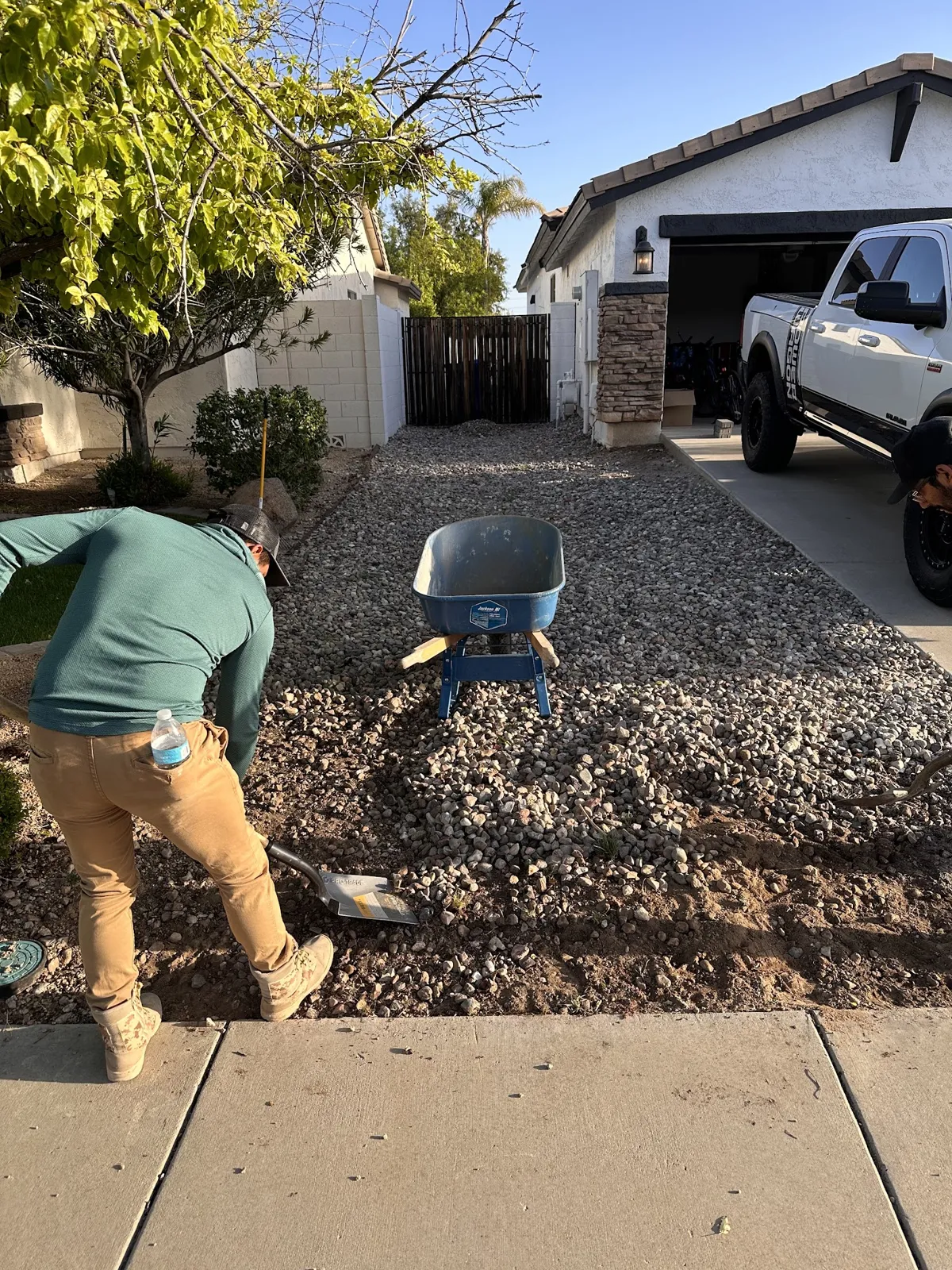
Rock does not stop weeds. Seeds blow in and sprout in the dust and leaf litter that collects on top of the rock and the fabric, and a monsoon storm can set off a wave of them overnight. A pre-emergent can stop those seeds from sprouting if it goes down in the right window, on a clean bed. If weeds are already growing in the gravel, pull them or spot treat them first, then apply the pre-emergent to stop the next batch.
Water It In, and Read the Label
Most pre-emergent products need to be watered in to move into the top of the soil, and the label tells you how much and how soon. The label also tells you which lawn types and plants the product is safe for, so check it before you apply anything near a lawn, trees or garden beds. If you overseed your lawn for winter, plan the two together, because a pre-emergent that stops weed seeds can also stop grass seed. UA Extension notes that herbicide choice has to consider a winter overseeded lawn.
If You Hire Someone
Ask what products they use, when they plan to apply them, and what credentials they hold. Pesticide use in Arizona is regulated by the Arizona Department of Agriculture, and a good company will be happy to answer. If you would rather hand off the weed work, CGL Landscaping’s weed control and residential maintenance pages show what the crews handle across Chandler, Gilbert, Mesa and Tempe.
What Customers Say
“They honestly do a very thorough job! Our kids play with chalk and rocks and anything they take outside and then we also have dogs so needless to say our yard was a wreck.. but I didn’t catch his name but one of their employees went above and beyond with their work got all the weeds, trash, chalk and even cleaned our dog poop up all without asking all we needed was weed clean up they even blew our patio furniture off and scraped the stuff out of the pavers 10/10 service”
Tyler Balderston, 5-star Google review
Frequently Asked Questions
When should I put down pre-emergent in Arizona?
For low desert lawns, University of Arizona Extension points to late September or early October for the winter weed flush, since annual bluegrass emerges in mid to late October, and to late February or early March for summer weeds. Exact timing shifts with the weather, so watch the temperatures.
I see weeds already. Is pre-emergent still worth it?
It will not kill weeds that are already growing, so remove those first by hand or with a post-emergent product. Then use the next window to prevent the next flush. If you missed the fall window, the late winter window still protects against summer weeds.
Does pre-emergent work in a rock yard?
Yes, in the sense that weed seeds blow in and sprout in the dust and debris on top of the rock and fabric, and a pre-emergent can stop those seeds from germinating. It cannot remove weeds that already have roots, so start from a clean bed.
Do I need to water it in?
Most products do, and the label tells you how much and how soon. Check the label for the product you use and follow it exactly.
Will pre-emergent stop my overseeding?
It can. A pre-emergent works by stopping seeds from sprouting, and that includes grass seed. UA Extension notes that herbicide choice has to consider a winter overseeded lawn, so plan your overseeding and your weed control together.
Can I apply it myself?
Homeowners can apply products on their own property by following the label. If you hire a company to apply it, ask what products they use and what credentials they hold, since pesticide use in Arizona is regulated by the Arizona Department of Agriculture.
Weeds taking over the lawn or the rock beds?
Call or send a message and tell us where the weeds are. We will let you know what the crew can do and when. Serving Chandler, Gilbert, Mesa and Tempe.
More CGL Landscaping services
- Residential landscape maintenance
- Weed control
- Lawn care
- Tree services
- Desert landscaping
- Drip irrigation
- Overseeding
- Chandler service area
Sources
- University of Arizona Cooperative Extension, Annual bluegrass (Poa annua) control in low desert Arizona (AZ1885, 2021)
- University of Arizona Turfgrass Extension, Spring Weed Control: Pre-Emergence Herbicides (Kopec, 1999)
- University of Arizona AZMET weather network
- NOAA NCEI, U.S. Climate Normals 1991-2020