When a frost warning hits Chandler, water your tender plants in the afternoon, cover them with frost cloth or a sheet (never plastic) that reaches the ground, and take the cover off the next morning. After a freeze, do not prune the brown growth until new growth starts in spring. Citrus, hibiscus and bougainvillea are the plants that most often need this help.
The first freeze warning of the year tends to arrive with little notice and a lot of questions. Which plants should I cover? What do I cover them with? Is it too late once they turn brown? This guide answers those questions for Chandler and East Valley yards, using University of Arizona Cooperative Extension guidance and NOAA temperature normals.
When Does Frost Actually Hit Chandler?
Frost is not a given every winter, but it is not rare either. According to University of Arizona Extension publication AZ1002, Frost Protection, the average first frost in Maricopa County runs from November 21 in Buckeye to December 12 in central Phoenix, and the average last frost runs from February 7 in central Phoenix to April 3 in Mesa. The spread comes from elevation, pavement and other local factors.
NOAA’s 1991-2020 climate normals show how that plays out in the southeast Valley. At the Chandler Heights station, an average December has about five nights at or below 32°F and about 18 nights at or below 40°F.
Chandler Heights: average nights per month at or below 32°F and 40°F
These are long-term averages, not a forecast. Bars start at zero. Source: NOAA NCEI U.S. Climate Normals 1991-2020, Chandler Heights, AZ station (USC00021514), monthly normals “days with minimum temperature at or below” 32°F and 40°F.
The same NOAA normals show the gap between the airport and the edge of town. Phoenix Sky Harbor averages about 0.6 freeze nights a year, while Chandler Heights averages about 10.5. UA Extension makes the same point: it suggests comparing a thermometer in your own yard with the airport reading, because a yard can run several degrees colder than the number on the news.
Why your yard can freeze when the airport does not: nights per year at or below 32°F and 40°F
The two stations are in the same metro area, but the city airport sits in the urban heat island. Bars start at zero. Source: NOAA NCEI U.S. Climate Normals 1991-2020, annual normals for Phoenix Sky Harbor (USW00023183) and Chandler Heights, AZ (USC00021514).
Which Plants Need Frost Protection?
Citrus trees, hibiscus and bougainvillea all come from warmer climates than a Chandler winter, so they are the plants homeowners worry about most. UA Extension notes that each plant species has its own cold tolerance threshold, and that actively growing foliage is the most vulnerable. Young, flowering and dehydrated plants tend to be hit hardest.
Which plants need cover on a freeze night? A quick guide
| Plant | Why it needs attention | What to do |
|---|---|---|
| Citrus trees (young trees most of all) | Grown for fruit and tender new growth that a hard freeze can damage. Young trunks are the vital stem area. | Water the tree, then drape cloth to the ground. Wrap young trunks, and keep wrapping loose. |
| Hibiscus | A warm-climate plant with soft, actively growing leaves and shoots. | Water well, then cover the whole plant with frost cloth or a sheet that reaches the ground. |
| Bougainvillea | A warm-climate vine whose tender tips and flowers are the first to blacken. | Cover vines on walls and fences from top to ground, or shelter young plants against a warm wall. |
| Potted tender plants | Pots lose heat from every side and have less soil to hold warmth. | Move them into a garage, a porch or against a south or west wall for the night. |
| Frost-hardy desert plants | Many natives are adapted to cold and do not need cover. | Skip the cover. UA Extension warns that over-protecting keeps plants from hardening to the cold. |
General guidance based on the University of Arizona Cooperative Extension frost publications listed under Sources. Plant hardiness varies by variety, age and exposure, so check yours.
How to Cover Plants Correctly
Covering plants works because it traps some of the heat that the soil radiates back into the sky overnight. UA Extension says to cover with cloth or paper, not plastic, and to drape the cover all the way to the ground so the heat stays under it. Frost cloth is sold for this job, and a properly applied cloth can protect plants down to about 30°F, some fabrics lower. Sheets and blankets give less protection.
Covering plants for a freeze, step by step
Based on the University of Arizona Cooperative Extension publications AZ1002 and Backyard Gardener #251. Not a statistic.
Do not cinch the cover at the trunk
The goal is to hold heat that rises from the ground. If the cover is gathered tightly around the trunk, the heat escapes. Let it hang to the ground at the drip line, ideally held up by a frame so it does not rest on the leaves.
Take the cover off in the morning
UA Extension says to remove sheets and blankets each morning once the temperature under them warms up, and to put them back on nights when a freeze is forecast. Leaving a cover on all winter can warm the plant enough to start growing again, which makes it more vulnerable to the next cold snap.
Wrap young citrus trunks
For young citrus and other frost-sensitive trees, UA Extension describes wrapping the trunk with multiple layers of weatherproof paper or cloth as a practical way to protect the vital stem area. Wrap loosely, down to the ground and up to the lower branches.
Use what is already in your yard
Block walls, rock and patios soak up sun by day and give heat back at night, so a plant on a south or west wall has an advantage. Cold air also flows downhill and settles in low spots, so the lowest corner of a yard is usually the coldest. UA Extension also lists what does not work well, including smudge pots and large fires, which pull cold air in and send heat upward.
What To Do After Plants Get Hit by Frost
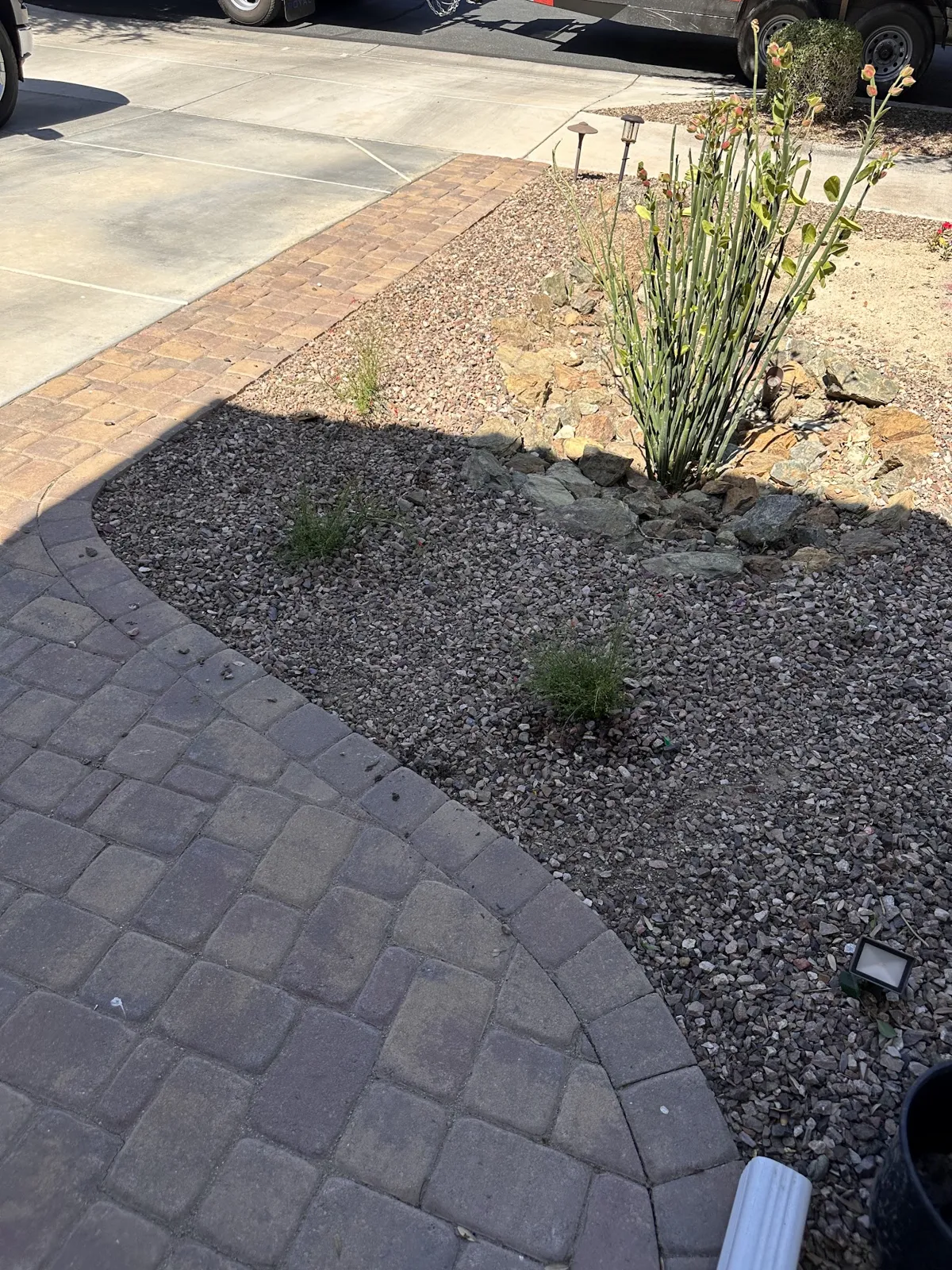
The hardest advice to follow is to leave the damage alone. According to UA Extension, do not prune frost-damaged woody plants until the danger of frost is past and the plant begins growing in spring. Pruning too early can stimulate new growth that a later frost will damage, and the damaged leaves and stems still help trap warm air in the canopy on cold nights.
UA Extension adds that the damage is often not nearly as bad as it first looks, and new growth may come from tissue you thought was dead. Wait for new growth to show where the live wood is, then prune out the dead wood. Keep watering as the weather allows, since a stressed plant recovers more slowly.
For grafted plants such as many citrus trees, UA notes that if the plant dies all the way back to the graft, the regrowth will be the rootstock and not the variety you wanted. If a tree is badly damaged, that is the time to get an opinion from a professional. When it is time to trim, CGL Landscaping’s residential landscape maintenance and tree services pages show what our crews handle in Chandler, Gilbert, Mesa and Tempe.
What Customers Say
“CGL Landscaping has been great to work with. We reached out to Jose to get an estimate for a one time clean up and monthly service. Jose and Alan showed up the next day to provide an estimate for both services. We elected to move forward with CGL and the clean up crew was out the following day to complete services. Two weeks later, the monthly maintenance crew showed up to complete our first monthly service.”
Cory Brunsting, 5-star Google review
This review is about CGL’s cleanup and monthly maintenance service, not frost protection. It is shown because ongoing maintenance is how most yards stay in shape through the seasons.
Frequently Asked Questions
When is the first frost in Chandler?
University of Arizona Extension lists the average first frost in central Phoenix as about December 12, and the average last frost in Mesa as about April 3 (publication AZ1002). Chandler Heights, in the southeast Valley, has 1.2 nights a month at or below 32°F in November and 4.9 in December on average, so a freeze can show up sooner at the edge of the Valley than at the airport.
Should I cover plants with plastic or a sheet?
Use cloth or paper, not plastic. The UA publication says sheets or blankets give minimal protection, and a properly applied frost cloth can protect plants at temperatures down to about 30°F, some fabrics lower. The cover should reach the ground so it traps the heat coming up from the soil.
Should I water before a freeze?
Yes. UA Extension says to keep plants adequately irrigated during cold weather, because frost injury is less severe when the plant is not already drought-stressed. Water in the afternoon before the cold night.
Can I prune frost-damaged plants right away?
No. UA Extension says not to prune frost-damaged woody plants until new growth starts in spring. Pruning early can stimulate tender new growth that a later frost would damage, and the brown leaves still help trap warm air in the canopy on cold nights.
How do I know how cold my yard gets?
UA Extension suggests keeping a min/max thermometer in your yard and comparing it with the airport reading. Its example is a yard that runs about 4 degrees colder than the airport, which can be the difference between a safe night and a damaging one.
Want a second set of eyes on your yard before the next freeze?
Call or send a message and we will tell you what the crew can help with, from seasonal cleanups to trimming once the danger has passed. Serving Chandler, Gilbert, Mesa and Tempe.
More CGL Landscaping services
- Residential landscape maintenance
- Weed control
- Lawn care
- Tree services
- Desert landscaping
- Drip irrigation
- Overseeding
- Chandler service area
Sources
- University of Arizona Cooperative Extension, Frost Protection (AZ1002, Lucy Bradley, 1998)
- University of Arizona Cooperative Extension, Frost Protection (Backyard Gardener #251, 2024)
- University of Arizona Cooperative Extension, Fall/Winter Freezes (Backyard Gardener #9)
- NOAA NCEI, U.S. Climate Normals 1991-2020