Quick answer: A pergola is the right pick for filtered shade, an open feel, and a frame for vines or lights over a patio. A ramada is the right pick for solid, all-day shade and a dry spot for an outdoor kitchen or dining table. A shade sail is the fastest, lightest option for a seating corner or play area, but it is fabric: it comes down in storms and will not last as long as a built structure.
Ask an East Valley homeowner what keeps them out of the backyard and the answer is the afternoon sun. A west facing patio in Chandler bakes from lunch until sunset, so the question is which shade structure fits the space, the budget, and the HOA. This guide compares all three on sun, monsoon wind, permits, and upkeep; our pergola and shade structure installation in Chandler page covers how we plan and build them.
Pergola vs. Ramada vs. Shade Sail at a Glance
| Structure | Shade | Wind and weather | Upkeep | Best for |
|---|---|---|---|---|
| Pergola | Filtered; a denser top or a vine adds more | Posts in footings; wind passes through | Wood needs sealing; metal needs little | Patios, lounges, vines, lighting |
| Ramada | Full; solid roof blocks sun and rain | Framed and anchored like a small roof | Roofing and paint, like a house | Outdoor kitchens, dining, all-day shade |
| Shade sail | Partial; depends on fabric and angle | Tensioned fabric; comes down in storms | Cleaning; fabric replaced over time | Play areas, pool decks, renters |
What a Pergola Does Well, and Where It Falls Short
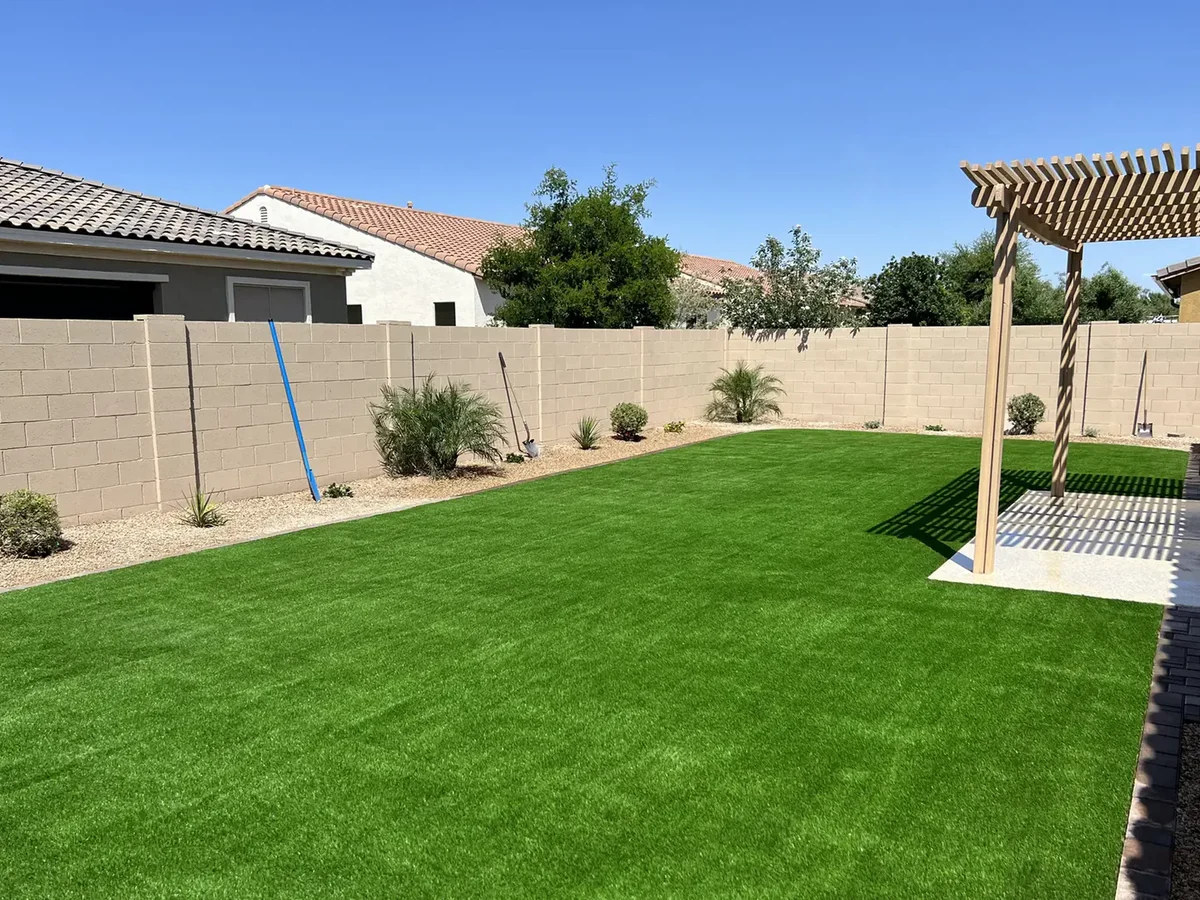
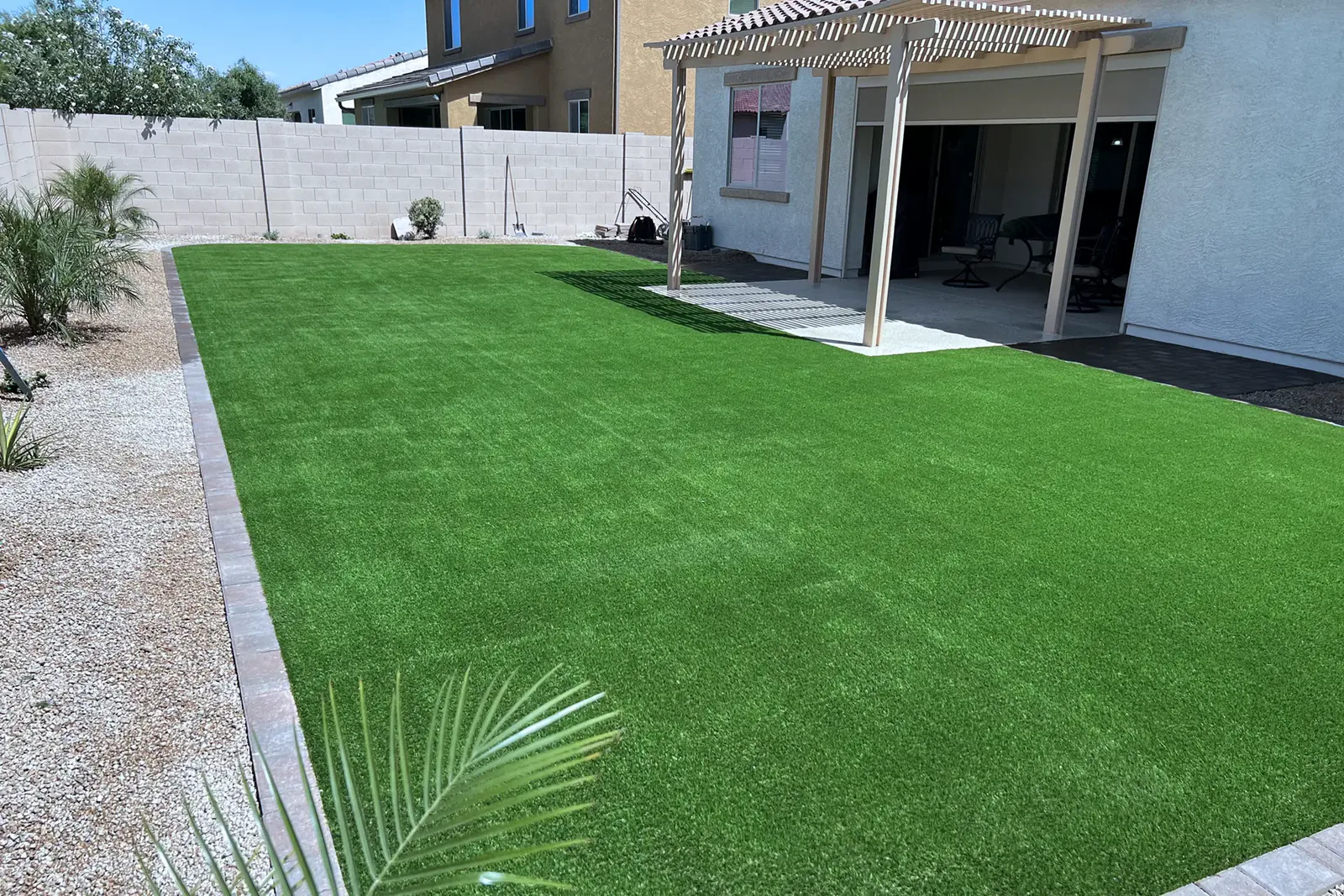
A pergola is an open frame: posts, beams, and a top of rafters, slats, or lattice with no solid roof. Its shade depends on how tightly the top is spaced and where the sun is. At noon in June an open pergola gives striped shade; add lattice or a bougainvillea on the posts and it fills in. The payoff is that a pergola never feels like a room: hot air escapes, the yard stays visible, and the frame carries lights, a fan, and plants. The tradeoff is that it does not stop rain and will not fully shade a west facing slab at 4 p.m. unless the top is dense. It is the natural fit over a paver patio, and landscape lighting on the beams turns it into an evening spot.
Aluminum vs. Wood Pergola in Arizona
Wood looks warm and stains to match the house, but in full Arizona sun it needs regular sealing or re-staining or it grays, checks, and splits. Aluminum does not rot, warp, or need staining, holds a powder coated finish, and is often shaped and colored to read as wood. Steel is used for long spans. Wood and metal price and wear differently, so the choice comes down to the look you want and the upkeep you will accept.

When a Ramada Is the Better Call
A ramada is a freestanding structure with a solid roof and open sides. It is the answer for a patio that needs real, all-day shade: a grill island, a dining table, or a lounge used in July. A true roof also sheds monsoon rain, carries a ceiling fan, and keeps an outdoor kitchen and its cook out of the sun. As reprinted in the City of Chandler Homeowner Building Permit Manual, ramadas are permitted in the side or rear yard, may not exceed 10 feet to the top of the roof or lattice, must sit at least 5 feet from side and rear property lines, and must be open on all sides except one. The tradeoffs are cost and weight, and a ramada blocks winter sun and views along with summer sun.
Shade Sails: Fast, Flexible, and Fabric
A shade sail is a tensioned piece of knitted shade cloth, usually HDPE, stretched between posts or wall mounts. It goes up in a day and can be moved or replaced. How much it blocks depends on the fabric: Coolaroo rates its ready-to-hang sails at up to 90 percent UV block in a 125 gsm HDPE fabric, with heavier premium lines rated up to 95 percent. The knit is breathable, so hot air is not trapped under it.
The limits are wind and lifespan. Coolaroo’s shade sail FAQ recommends removing sails in severe storms or high wind to prevent damage, and its ready-to-hang line carries a 3 year fabric warranty. In Chandler that means taking it down when a monsoon storm rolls in, and anchoring it to posts in footings or the house framing, never a fence post or fascia board.
Permits and HOA Rules in Chandler and the East Valley
Permit rules vary by city and by HOA, so check first. Chandler’s Homeowner Building Permit Manual (Rev. 4/09/26) exempts one-story detached accessory structures from a building permit only when the floor area does not exceed 120 square feet and the height does not exceed 7 feet. Anything larger, or attached to the house, needs a permit; the manual states that patio cover posts require a footing and that the minimum height from finished floor to the bottom of any beam is 6 feet 8 inches. Homeowners in an HOA are told to get the association’s approval before applying, because the city does not enforce HOA rules. Gilbert, Mesa, Tempe, and Queen Creek have their own rules, and many HOAs add height, color, and material limits.
How to Choose: Four Questions
- Which way does the space face? A west facing patio takes the worst of the day and usually needs a denser top, a ramada, or a sail hung low on the west side. East facing patios are often fine with an open pergola.
- Do you need rain cover? If the grill or dining table has to stay dry, choose a ramada. If not, a pergola or sail does the job for less.
- What goes under it? An outdoor kitchen wants a ramada, a lounge on pavers or turf is happy under a pergola, and a trampoline only needs a sail.
- How long are you staying? A built structure is permanent. A sail is the answer when you want shade this summer and are not sure what the yard will look like in five years.
Most well-used yards combine them: a ramada over the kitchen, a pergola over the lounge, a sail over the kids’ corner, and desert trees on the west side. Our post on how landscape design creates natural shade covers the planting side.
What Customers Say
Best landscapers I’ve ever had! I live in an HOA with very strict rules and they did an absolutely fabulous job. So thankful to have found them. Each of their employees are extremely hard working and even go above and beyond wiping off patio furniture and making every part of the front/backyard presentable. Can’t wait to see them again!
Frequently Asked Questions
Is a pergola or a ramada better for Arizona heat?
A ramada blocks more sun because the roof is solid, so it wins for all-day shade over a kitchen or dining area. A pergola gives filtered shade and lets heat escape. For a west facing patio, choose a ramada or a pergola with a dense top.
Do I need a permit for a pergola in Chandler?
It depends on size and whether it is attached. Chandler’s homeowner permit manual exempts one-story detached accessory structures up to 120 square feet and 7 feet tall; larger or attached structures need a permit. Other cities have their own rules, and your HOA may require approval first.
Can a shade sail stay up all year in the East Valley?
Manufacturer guidance says to remove sails in severe storms or high wind, which in Chandler means monsoon season. Plan on taking it down for storms and treat the fabric as a replacement item.
Which costs less: pergola, ramada, or shade sail?
A shade sail generally costs the least and a ramada the most, because it is a framed roof. Pricing depends on footprint, material, shade density, and whether it is attached or freestanding, so get a written quote rather than relying on a range.
What should go under a pergola?
Pavers, a concrete pad, or artificial turf stay cleaner than bare dirt and keep the posts out of standing water. We plan the surface, footings, and any irrigation lines together so post holes do not become a repair job.
Get Shade Where You Actually Sit
CGL Landscaping builds pergolas and shade structures in Chandler, Gilbert, Mesa, Tempe, and across the East Valley, planned around your patio and the sun. Every free on-site estimate comes with a written price. Call (480) 219-0038 or request a free estimate.